.jpg)
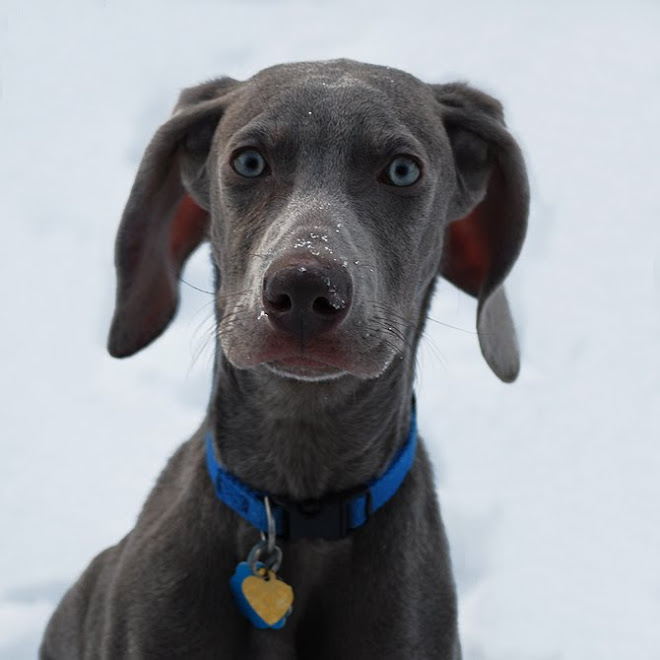
What a winter it has been, and we are still in it! Fifth highest snowfall since recordkeeping started for Albany, NY, an hour away from me. I believe Pittsfield got even more. In a one month stretch, it snowed every day. The biggest storm dropped 2.5 feet. Record cold temperatures as well. Weeks at a time in single digits often below zero during the nights. Wind chills even worse. I think about last winter when I packed down the snow just by walking back and forth while Thor ran. It would be impossible to do that this year. The dogs don't want to be out for more than a few minutes and, even then, Glitter often comes in limping.
Despite the weather, Glitter and I have been participating in the Capital District Agility Fun League where she is having a banner year. Perhaps she knows it will likely be her last? She is consistently getting scores where in past years we either trained (using food which makes it No Score), or going over max course time due to visiting and sniffing, or not getting enough points in games to have our score count (in the team scoring, they drop the lowest score).
I've also attended two seminars with Glitter. One, "Nothin' But Net" (an expression borrowed from basketball) was about getting your dog to ignore distractions, something Glitter desperately needs. I have always attributed Glitter's lack of focus at trials to stress. While that may have been true, Bobbie Bhambree (presenter) of Divine K-9, says that's an excuse that lets the dog off the hook. She believes that agility has not been given enough value (through reinforcements), that reinforcement is being used incorrectly (that once a dog has learned and been proofed on a skill, that skill should rarely be reinforced. By reinforcing an "easy" skill, dogs realize that they don't have to work hard. By the end of this seminar, Bobbie had Glitter doing restrained recalls through two lines of people talking to her AND treats scattered on the floor which she actually had to run over to get to me!! After two unsuccessful attempts (she grabbed a few pieces of food en route), which I did not reinforce but simply returned her to Bobbie, the third attempt was successful! She ran over the food as if were not even there, fast and focused on me! Jackpot, jackpot, jackpot!!!
The second seminar was called "Superstar Seesaw." Although Glitter has an excellent seesaw performance (after tons of noise games, movement games, tippy board play, wobble board, seesaw games while slowly increasing height), I wanted to learn what Bobbie had to teach. I was afraid Thor was not ready for a new environment with new dogs and new people. So took Glitter with the intention of learning the games which I would then bring home to Thorry. Turns out, I knew all the games but one! All the things that I had done with Glitter. Made me feel pretty smart! And gave me greater confidence to work with Thor (who has done a lot of tippy board work and is doing a seesaw close to full height). Although he had no fear of movement or noise, I should not have rushed him until we had played more of the games. I need to build more drive to the seesaw and more comfort crossing narrow boards. Now I know, without uncertainty, what I'll need to do (come spring!) with Thor.
Been too cold and icy, with inadequate sand spread at all training facilities (not to mention early darkness when I should not be driving), for me to continue classes. That, along with the lack of yard exercise and lack of park play, means that Thor has not been getting the exercise that he needs. In the house, we have been working on impulse control, heeling, tug (which he loves!), "get it" and "let go." Thor took some of these skills and invented his own game. I sit in a chair with an armload of (chewed up) bits of soft toys. I wait for Thorry to sit (without telling him to sit); it has to be his idea, his impulse control, his way of saying "please."
When he is sitting (and leaning forward with intensity and focus), I toss one scrap. Thorry leaps up to grab it! At first, he would drop the one he had, sit, and wait for me to throw the next until I was all out of scraps. Then I would go and gather them up again. As we played more, Thor began to return each scrap to me after catching it. Now we can play with just one scrap because I always get it back! I've started adding cue words, "catch" just before I throw it, "let go" when he's about to release it to me, and sometimes "tug. He is equally happy to get his reward by continuing the game or by breaking into a game of Tug. Cool!
Wednesday, March 2, 2011

Tuesday, January 18, 2011
Activities of Fall
During the fall, Thor and I took Beginner and Beyond Beginner Agility. By the time we got into Beyond Beginner, the class had grown to 8-9 dogs! Because a lot of the new teams had not taken Beginner Agility at the farm, they were lacking in basic skills. We spent a lot of time going back over the Beginner lessons. While I don't think that is necessarily a bad thing (review can be helpful), I felt that Thor was bored. As a result, he was more distracted, more likely to leave me, more disruptive in general.
At the same time, we started going to the park almost daily. It's not a busy park; sometimes we were the only ones there, other times there were 1-4 other dogs. When we were there by ourselves, I set up jumps in close configuration (straight line bounces, curving bounces--a bounce is when the dog lands and takes off immediately without taking a stride between jumps). By doing this, I hoped to teach Thor collection, a shortening of stride for turns and weave pole entries, and a rounding of back over jumps. We also worked on sends to jumps from as far away as 30 feet; Thor took these in extension (running fast with long strides and jumping flat). My friend Lisa loaned me her set of training 2x2 weave poles, and Thor started learning the fundamentals of weaving--going between closely spaced poles at speed. With the 2x2 method, the poles are not in a straight line to start so it's very easy for the dog to race through. Over time, the poles are rotated and more poles are added until the finished performance is achieved. At this early stage, no weaving/bending action is required reducing stress on the body of a still-developing young dog.
On days when other dogs were present we did one of two things. If the other dog(s) were in the main field where we were, I let Thor play. He played very well, checking in with me regularly and coming back to me when called. If the dogs were at a distance (in the next field over with a post-and-rail fence between or walking on the road), then I would let Thor wander until he got as far as I wanted him to and then called him back. He always came. Not always as fast as I wanted; often he would loop around in a big circle as he came to me. But even if he was heading directly toward another dog, he would come when called. One day, a dog came through the fence and was running directly towards us. Thor took off in that direction. I called. He came!
Although I always give him a treat when he comes, I have not taught a recall from the beginning baby steps that I would use with most dogs. Thor didn't seem to need that. It is inborn in him to stay close, to want to be near me. That's really the only way I can explain why he learned to come so easily even with distance and distractions.
At the same time, we started going to the park almost daily. It's not a busy park; sometimes we were the only ones there, other times there were 1-4 other dogs. When we were there by ourselves, I set up jumps in close configuration (straight line bounces, curving bounces--a bounce is when the dog lands and takes off immediately without taking a stride between jumps). By doing this, I hoped to teach Thor collection, a shortening of stride for turns and weave pole entries, and a rounding of back over jumps. We also worked on sends to jumps from as far away as 30 feet; Thor took these in extension (running fast with long strides and jumping flat). My friend Lisa loaned me her set of training 2x2 weave poles, and Thor started learning the fundamentals of weaving--going between closely spaced poles at speed. With the 2x2 method, the poles are not in a straight line to start so it's very easy for the dog to race through. Over time, the poles are rotated and more poles are added until the finished performance is achieved. At this early stage, no weaving/bending action is required reducing stress on the body of a still-developing young dog.
On days when other dogs were present we did one of two things. If the other dog(s) were in the main field where we were, I let Thor play. He played very well, checking in with me regularly and coming back to me when called. If the dogs were at a distance (in the next field over with a post-and-rail fence between or walking on the road), then I would let Thor wander until he got as far as I wanted him to and then called him back. He always came. Not always as fast as I wanted; often he would loop around in a big circle as he came to me. But even if he was heading directly toward another dog, he would come when called. One day, a dog came through the fence and was running directly towards us. Thor took off in that direction. I called. He came!
Although I always give him a treat when he comes, I have not taught a recall from the beginning baby steps that I would use with most dogs. Thor didn't seem to need that. It is inborn in him to stay close, to want to be near me. That's really the only way I can explain why he learned to come so easily even with distance and distractions.
Thursday, November 11, 2010
Neutered, at Last
Yippee! I stuck to my guns and waited til Thor had passed the 14-month mark. We ended up going to Northampton Veterinary Clinic to a vet who is involved in the agility world and agreed with me that it was right to wait for growth to be complete. On October 18, I took Thor in for pre-neuter blood work and urinalysis. All good. I had been worried about his blood sugar as Thor seems to drink and pee A Lot! Turns out, nothing to worry about. In the message left on my machine, vet tech Jen (my sister) said Thor's blood work was "pristine." I laughed at her use of that word; that anything about Thor would be pristine is too funny! Thor behaved better than I'd expected, walking nicely with Jen into the exam room. And sitting when asked.
After our appointment, we stopped at my mother's house. She has a little gully in back, and I took Thor there. I stood at the bottom and sent Thor running up both sides. My sister (who hadn't known we were coming) saw Thor out the window and thought, at first, he was a deer! She was impressed by his speed and his quick responses to come back to me when I called.
On October 26, I took Thor in at 8:45. We had to wait for about 1/2 an hour for the vet, Leeanne, to see us. Thor was very good, even lying down during the time that we were alone in the exam room. Jen scanned for his microchip which was hard to find. She had to use a second scanner and, it turns out, he has an international chip that is not universally read by all scanners. That news made me irritated with my original vet who had implanted the chip. In the past, they had used Home Again (which all my previous chipped dogs have had) and didn't tell me until AFTER the implant that they had switched to a different brand. And they never did tell me it was an international chip or that some scanners cannot read it!
Leanne commented on how good Thor's coat looked. I think she was also impressed that he sat for her. I was displeased that he kept jumping up on the counter but, I have to admit, there were dog treats up there. Counter surfing is a problem at home, too, probably due to my poor housekeeping!
I asked if I could leave a stuffed toy for Thor to have when he woke up. I expected to be told no. Most vets don't want anything left (often not even a leash or collar!) because they are afraid of losing things. But I was told I could leave the toy, his harness, a collar, his leash. Wow.
Thor was ready for pick-up by 3:30pm. On the Discharge Instruction sheet are two photos of Thor: a head shot taken on arrival and the second in recovery. In the recovery shot, Thor is lying with his head on a large stuffed dog; he's covered by a blanket and his own toy is on the blanket. He looks so sweet!
In addition to neutering Thor, they scaled his teeth, cleaned out his ears, and attempted (no luck) to flush his tear ducts. It turns out that what I had identified as cherry eye is something else. It is an inherited disorder called everted nictitans. Basically, the cartilage inside the third eyelid curls inward. Because the cartilage is encased in the 3rd eyelid which is soft, is causes no damage to the eye and no discomfort. Leanne says she'll do surgery if it worsens but for now she wants to leave it alone. Heartworm and Lyme tests were negative. Thor weighs 59 pounds, my little baby.
Keeping Thor quiet for two weeks was challenging. But it was also a bonding experience. I had mixed feelings about the neutering, wondering if I should have waited longer. Or x-rayed growth plates. Or both. In my self-questioning, I was sympathetic to Thor. And that was a good thing for us.
After our appointment, we stopped at my mother's house. She has a little gully in back, and I took Thor there. I stood at the bottom and sent Thor running up both sides. My sister (who hadn't known we were coming) saw Thor out the window and thought, at first, he was a deer! She was impressed by his speed and his quick responses to come back to me when I called.
On October 26, I took Thor in at 8:45. We had to wait for about 1/2 an hour for the vet, Leeanne, to see us. Thor was very good, even lying down during the time that we were alone in the exam room. Jen scanned for his microchip which was hard to find. She had to use a second scanner and, it turns out, he has an international chip that is not universally read by all scanners. That news made me irritated with my original vet who had implanted the chip. In the past, they had used Home Again (which all my previous chipped dogs have had) and didn't tell me until AFTER the implant that they had switched to a different brand. And they never did tell me it was an international chip or that some scanners cannot read it!
Leanne commented on how good Thor's coat looked. I think she was also impressed that he sat for her. I was displeased that he kept jumping up on the counter but, I have to admit, there were dog treats up there. Counter surfing is a problem at home, too, probably due to my poor housekeeping!
I asked if I could leave a stuffed toy for Thor to have when he woke up. I expected to be told no. Most vets don't want anything left (often not even a leash or collar!) because they are afraid of losing things. But I was told I could leave the toy, his harness, a collar, his leash. Wow.
Thor was ready for pick-up by 3:30pm. On the Discharge Instruction sheet are two photos of Thor: a head shot taken on arrival and the second in recovery. In the recovery shot, Thor is lying with his head on a large stuffed dog; he's covered by a blanket and his own toy is on the blanket. He looks so sweet!
In addition to neutering Thor, they scaled his teeth, cleaned out his ears, and attempted (no luck) to flush his tear ducts. It turns out that what I had identified as cherry eye is something else. It is an inherited disorder called everted nictitans. Basically, the cartilage inside the third eyelid curls inward. Because the cartilage is encased in the 3rd eyelid which is soft, is causes no damage to the eye and no discomfort. Leanne says she'll do surgery if it worsens but for now she wants to leave it alone. Heartworm and Lyme tests were negative. Thor weighs 59 pounds, my little baby.
Keeping Thor quiet for two weeks was challenging. But it was also a bonding experience. I had mixed feelings about the neutering, wondering if I should have waited longer. Or x-rayed growth plates. Or both. In my self-questioning, I was sympathetic to Thor. And that was a good thing for us.
Monday, November 8, 2010
Agility #5 & #6
Week #5 coincided with AgileDogs USDAA trial. I was photographer for the event, and Kathy was running her dogs. But still, there was class. I arrived early with Thor to let him run in the fenced pond area. I let him run a second time just before class. Thor loves to run with the other dogs. One of my friends commented that he "runs circles around every other dog." He certainly is fast, and his favorite thing is to run while another dog chases him. No dog can catch him!
Class went well. Because Kathy had to leave to run her dogs, class went longer than usual, and my friend Barb filled in to teach. I love Barb's style, but it is very different from Kathy's. I think some of the other handler's had a hard time adapting. Barb spends a lot of time talking and explaining satisfying my desire for full understanding of the reasons behind the methods. Kathy does more skill practice. Both are important and it can be challenging for instructors to find the right balance. Anyhoo, because the class went long, my legs gave out so I put Thor away. We'd had a good class.
I brought my camera to take pictures while watching and listening. Deb's sheltie, Lucy, LOVES tunnels. She was happy to run back and forth through a straight tunnel ignoring the treats that Deb tossed! Repeating the tunnel was reward enough for Lucy! And she already understood the concept of offering behaviors. Linda's shepherd, Vasso, had a harder time. Although only 11 months old, he has a history of formal obedience and wears a nylon choke collar. So Vasso has been exposed to corrections for making incorrect choices. This is a dog who will have trouble offering behaviors because he is afraid of the consequences of making a mistake. Vasso, who had been doing tunnels when directed, was unable to initiate tunnel behavior on his own. Barb directed Linda to click/treat for looking at the tunnel, looking in the tunnel, putting head in tunnel, stepping one foot into tunnel. Vasso is a smart dog and made really good progress. But to Linda it must have felt like big steps backwards. She was frustrated and close to tears despite Barb (and me) insisting that Vasso had made great strides forward. Bean went next. I know nothing of Bean's history but he is five years old and new to agility. He reacted to the exercise similarly to the way Vasso had. Both did a great job for dogs just being introduced to shaping. Bean's handler was fine with it, Vasso's was not. It made me very sad to realize that Vasso's early training had been with outdated methods.
I ended up with two photos that I like. First, a picture of Roo (Barb's dog) happily demonstrating his "Go To Mat" behavior. Second, a picture of Vasso peaking out of a tunnel and looking very worried. These two photos illustrate the results of different training methods. Roo, who has known only scientific, modern, positive training, and Vasso, who has done traditional obedience training in a choke collar. As if I needed any more convincing...


Thursday, November 4, 2010
Agility Class #4
As we started class, Kathy informed us that a friend of hers might be coming to watch. Okay, that's something Thor and I can handle! BUT, as it turned out, he brought his little dog with him! Not only did he bring a dog, but instead of just watching, he brought his dog out into the ring. While I was working Thor on bottom behavior (2 on-2 off) on a plank, this man and his dog came up very close behind Thor. I said, "Would you please move back just a bit? My dog isn't always reliable." Dog and man didn't move. Luckily, Kathy was paying attention. She came over and explained that Thor is very distractible and needed more space to be able to focus on his task. At that point, dog and man moved back just a bit. I realized then that visitors to classes need to be prepped in advance as to appropriate spectator behavior. I don't think visitors should bring their dog. I think they should be limited to a spectator area outside the ring. Watch and learn, not get in the way! The purpose of visiting a class should be to assess whether or not it's something you might like to do with your own dog. To see if an instructor and his/her methods fit with the way you want to train. No reason to disrupt the class!
Friday, October 29, 2010
Agility Class #3
Interestingly, a new dog once again joined our class. This was able to happen because the handler has previously trained another dog and had already started this one. But it certainly is disruptive! The handler, who I know from trials, is someone who does not supervise her dogs closely and does not put their best interests first. I say this because she chooses to set up her dogs very close to the agility rings at a trial and then complains when her dogs bark! Several people have spoken to her about this and at the last trial she finally parked further away. So maybe she is learning.
At the beginning of class, I was sitting on the sidelines doing attention work with Thor. The A-frame was set near the spectator area and could, of course, been taken from either side. If I were choosing to do it, I'd have sent my dog so he was moving away from other dogs. But this handler chose to put her dog over the A-frame coming right at Thor. At the bottom, her dog was not 3 feet from us. Naturally, the dogs reacted. I just kept feeding Thor and got his attention back quickly. Throughout the first half of class, I was trying to move around enough to keep Thor away from the oblivious handler. That's really hard for me these days with my impaired mobility.
I've been using forearm crutches in most areas of my life. I don't yet use them with Thor because I really need two hands to control him. But it means that I spend part of each class sitting on the ground! I don't mind that, but would it be asking to much to expect others to steer clear of us? Linda, who is training GSD Vasso, has the dog that interests Thor the most. Yet Linda is very knowledgeable and very aware of her dog and their surroundings. She has done a great job helping me by keeping her distance and asking from time to time if she is in a good place. My friend who has a sheltie, Lucy, is less aware but since Thor has little interest in Lucy that has not been a problem. But this new handler and dog... tough stuff.
About halfway through class, we were working on ramp bottom behavior. Dogwalk planks were placed across a low table with a target at the end. Thor raced to the end but was more interested in Kathy who was standing there than the food on the target. When Kathy stepped in to point out and reposition the food treat, Thor leapt into her face to greet her. This happened several times and I was unable to stop it. I was afraid that Kathy was getting hurt. So I left, put Thor in his crate in the car, and sat in the car to give myself a break.
When Kathy came out, I shared my frustration with trying to control Thor and my frustration with the new handler not keeping better distance between her dog and the others. We talked for a few minutes, and I sent Kathy back to class but not before she suggested I bring Thor in after class to play with him alone. Good idea.
Alone in the building, Thor was a different dog. I was able to send him into tunnels from all angles and work rear crosses with two jumps. Kathy commented on Thor's distance skills! So, we ended on a good/positive note, thanks to Kathy. I think Thor needs more exercise prior to class...
At the beginning of class, I was sitting on the sidelines doing attention work with Thor. The A-frame was set near the spectator area and could, of course, been taken from either side. If I were choosing to do it, I'd have sent my dog so he was moving away from other dogs. But this handler chose to put her dog over the A-frame coming right at Thor. At the bottom, her dog was not 3 feet from us. Naturally, the dogs reacted. I just kept feeding Thor and got his attention back quickly. Throughout the first half of class, I was trying to move around enough to keep Thor away from the oblivious handler. That's really hard for me these days with my impaired mobility.
I've been using forearm crutches in most areas of my life. I don't yet use them with Thor because I really need two hands to control him. But it means that I spend part of each class sitting on the ground! I don't mind that, but would it be asking to much to expect others to steer clear of us? Linda, who is training GSD Vasso, has the dog that interests Thor the most. Yet Linda is very knowledgeable and very aware of her dog and their surroundings. She has done a great job helping me by keeping her distance and asking from time to time if she is in a good place. My friend who has a sheltie, Lucy, is less aware but since Thor has little interest in Lucy that has not been a problem. But this new handler and dog... tough stuff.
About halfway through class, we were working on ramp bottom behavior. Dogwalk planks were placed across a low table with a target at the end. Thor raced to the end but was more interested in Kathy who was standing there than the food on the target. When Kathy stepped in to point out and reposition the food treat, Thor leapt into her face to greet her. This happened several times and I was unable to stop it. I was afraid that Kathy was getting hurt. So I left, put Thor in his crate in the car, and sat in the car to give myself a break.
When Kathy came out, I shared my frustration with trying to control Thor and my frustration with the new handler not keeping better distance between her dog and the others. We talked for a few minutes, and I sent Kathy back to class but not before she suggested I bring Thor in after class to play with him alone. Good idea.
Alone in the building, Thor was a different dog. I was able to send him into tunnels from all angles and work rear crosses with two jumps. Kathy commented on Thor's distance skills! So, we ended on a good/positive note, thanks to Kathy. I think Thor needs more exercise prior to class...
Monday, October 11, 2010
Agility Class # 2
There was a new dog in class (he'd been getting neutered the week before). Junior is a Brittany who took an extreme interest in Thor. Thor was equally interested, and the two kept trying to get closer to each other. I sat out several exercises in order to work on attention on the sidelines with Thor. He responded well to this, and I will plan to do it again.
After we rejoined the class, Junior managed to get away from his (two) handlers and came right to Thor. Junior growled, Thor play bowed. It was a little bit scary because of the growl. After Junior was corraled, Kathy used the opportunity to explain why a dog should never be corrected for growling. Corrections may remove the growling and you are left with a dog who gives no warning. This can be a very dangerous dog. This is something I understand well. No doubt my Vada was punished for growling. Her attacks (of other dogs) came with no indication of how she was feeling. Eventually, Vada became a home dog and I no longer took her places because of her unpredictability. She was much happier after that.
I told Junior's owners that I saw nothing really alarming in his behavior and that Kathy was right. However, they decided not to return to class. They emailed Kathy and explained that they had moved and it was simply too far to come. I suspect they were surprised at how much difficulty they had controlling Junior and that that played at least some part in their decision. Anyway, I'm glad they won't be back.
After we rejoined the class, Junior managed to get away from his (two) handlers and came right to Thor. Junior growled, Thor play bowed. It was a little bit scary because of the growl. After Junior was corraled, Kathy used the opportunity to explain why a dog should never be corrected for growling. Corrections may remove the growling and you are left with a dog who gives no warning. This can be a very dangerous dog. This is something I understand well. No doubt my Vada was punished for growling. Her attacks (of other dogs) came with no indication of how she was feeling. Eventually, Vada became a home dog and I no longer took her places because of her unpredictability. She was much happier after that.
I told Junior's owners that I saw nothing really alarming in his behavior and that Kathy was right. However, they decided not to return to class. They emailed Kathy and explained that they had moved and it was simply too far to come. I suspect they were surprised at how much difficulty they had controlling Junior and that that played at least some part in their decision. Anyway, I'm glad they won't be back.
Subscribe to:
Posts (Atom)